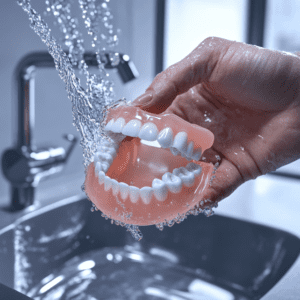
Dentures are a standard solution for people who have lost teeth, allowing them to chew and speak normally. However, certain foods should be avoided by denture wearers because they can damage the dentures or cause discomfort.
Hard or crunchy foods can put excessive pressure on dentures, potentially leading to cracks or breakage. Similarly, sticky foods can easily get stuck to the dentures, making them difficult to remove and potentially irritating the gums.
5 things you can’t eat with dentures
Certain foods, such as tough meats, seeds, nuts, sticky foods, staining drinks like coffee, and hard foods, can potentially damage or dislodge your dentures, leading to discomfort and potential repairs.
Understanding which foods to avoid can help maintain the longevity and functionality of your dentures, ensuring a comfortable and functional smile. Foods you cannot eat with dentures include:
Tough meat (like steak)
You cannot eat tough meat like steak with dentures because the dentures lack the strength to chew the food properly, and it can dislodge the dentures. Alternatives to tough meat include minced meat, lighter meats, sous-vide steak or meat spreads.
While designed to function like natural teeth, dentures are not as strong and cannot exert the same bite force. They sit on the gums and do not offer the same stability and chewing power as natural teeth. Tough meats require strong chewing to break them down, and the pressure can damage the dentures or dislodge them.
This can cause discomfort and pain, and even lead to denture slippage. Consider switching to tender cuts of meat, like chicken or fish, or opting for minced meat options, which require less chewing effort. If you enjoy steak, choose a sous-vide steak that is cooked to a softer consistency. Alternatively, meat spreads like hummus and meat or fish spreads can provide protein without excessive chewing.
Seeds & nuts
You cannot eat seeds and nuts with dentures because they can get lodged under the dentures, causing discomfort and potential damage. This is especially true for traditional dentures that rely on suction or clips for stability.
Instead of eating seeds and nuts whole, you can consume them in alternative forms. Nut butters provide the flavor and nutrients of nuts without the risk of getting stuck. Nut flours are ground nuts that can be used in baking. Soaking and blending nuts can create a smooth paste that is easier to consume. You can also consider alternatives like sunflower seeds, which are softer and less likely to get lodged under dentures.
Soft fruits like bananas are also excellent alternatives to seeds and nuts. If you enjoy the texture of nuts and seeds, try crushing them before eating to reduce the risk of them getting stuck under your dentures.
Sticky foods (like candy)
Eating sticky foods like candy with dentures can cause the dentures to become dislodged or damaged and can be difficult to remove, creating a breeding ground for bacteria that can lead to gum disease. Alternatives to sticky foods include softer options like pudding, yogurt and applesauce.
You can also choose to eat fruits that are easy to bite into, like bananas or ripe peaches. Additionally, cooked vegetables like mashed potatoes or squash are also good choices. It is important to speak with your dentist about the best foods to eat with dentures since they can provide personalized advice based on your needs.
Coffee and other staining drinks
Denture wearers should avoid coffee and other staining drinks because they can discolor the dentures. Tea, red wine and other pigmented beverages can stain dentures over time. This is due to the tannins and other pigments in these drinks, which can bond to the surface of the dentures and create discoloration. This discoloration can be difficult to remove, making dentures look old and unattractive.
Denture wearers can enjoy alternatives to coffee and other staining drinks, such as:
- Milk: Milk is a good calcium source and is less likely to stain dentures than coffee or tea.
- Herbal teas: Herbal teas, such as chamomile or peppermint, are caffeine-free and do not contain tannins.
- Fruit juices: Fruit juices, such as apple juice or orange juice, can be diluted with water to reduce their staining potential.
- Clear sodas: Clear sodas such as Sprite or 7-Up are less likely to stain dentures than dark sodas.
If denture wearers consume staining drinks, they should brush them immediately afterward to help prevent staining. It is also important to clean dentures regularly to remove any buildup of stains.
Any hard food
Dentures can make chewing hard foods difficult since they lack the same biting force and stability as natural teeth. Denture wearers must avoid hard foods that can damage the dentures or cause discomfort. These include nuts, hard candies, raw vegetables, and uncooked meats. Avoiding sticky foods like caramel, taffy and some fruits is also important. These foods can adhere to the dentures and make them difficult to remove.
Denture wearers can still enjoy a variety of foods, even those with a harder texture, by preparing them differently. Many hard foods can be softened by cooking, steaming or mincing them. For example, tough meats like steak can be enjoyed by cooking them until tender or by substituting them for softer meats like chicken or fish. Hard vegetables, like carrots and broccoli, can be steamed or cooked until soft.
Nuts can be ground into nut butter to enjoy them. Denture wearers can also benefit from eating soft fruits like bananas, mangoes, oranges and peaches. Additionally, slow-cooked or minced meats are good alternatives to steak. Like hummus or cream cheese, smooth spreads can provide healthy alternatives to sticky foods.
More foods to avoid when wearing dentures
- Whole kernels of popcorn
- Hard rolls, bagels or breads
- Raw vegetables
- Corn on the cob
- Small seeds
- Hard shellfish (like crabs and lobsters)
Why do I need to avoid certain foods with dentures?
You need to avoid certain foods with dentures to prevent damage to the dental prosthetics. Tough meats, seeds, nuts, sticky foods, staining drinks like coffee, and hard foods can dislodge or harm the dentures, leading to discomfort and the need for repairs. Protecting your dentures is crucial to maintaining a comfortable and functional smile.
However, please replace the foods you cannot eat with softer versions to avoid malnutrition.
According to Ya Su, Michiko Yuki, Kengo Hirayama, Miho Sato, and Tianfang Han’s 2020 study “Denture Wearing and Malnutrition Risk Among Community-Dwelling Older Adults,” older adults wearing complete dentures were eating significantly fewer meats or fish every day compared to non-denture-wearing older adults. The proportion of the whole population with a risk of malnutrition was 23.5%. However, partial denture wearers were found to have a protective effect against the risk of malnutrition, with more partial denture wearers having normal nutritional conditions and cooking by themselves than non-denture-wearing older adults. (Su, Yuki, Hirayama, Sato, & Han, 2020).
How long should I avoid certain foods after getting dentures?
You should avoid hard, sticky, and tough foods for at least several weeks after getting dentures. This allows your gums to adjust to the dentures and prevents any discomfort or damage. Your dentist can provide specific recommendations based on your individual circumstances.
According to NHS, 2018, denture wearers should start with soft foods and cut food into small pieces. They recommend eating slowly, using both sides of the mouth and avoiding chewing gum and sticky foods. Additionally, they suggest avoiding food with sharp edges.
Foods to avoid for at least several weeks:
- Hard foods: This includes nuts, hard candies, popcorn, raw carrots and tough meats. These foods can damage your dentures or cause them to become loose.
- Sticky foods: This includes caramel, taffy, gummy candies and peanut butter. These foods can get stuck to your dentures and make it difficult to clean them.
- Tough meats: This includes steak, ribs and other tough cuts of meat. These meats can be difficult to chew with dentures and may require a lot of effort, leading to discomfort.
Tips for transitioning back to your normal diet:
- Start with soft foods: These include mashed potatoes, yogurt, scrambled eggs and soups.
- Gradually introduce firmer foods: As your gums adjust, you can gradually introduce firmer foods, such as cooked vegetables, chicken and fish.
- Cut your food into small pieces: This makes it easier to chew and digest.
- Chew on both sides of your mouth: This will help distribute the pressure evenly and prevent your dentures from becoming loose.
Foods to avoid permanently:
- Foods that stain: This includes coffee, tea, red wine and berries. These foods can stain your dentures and make them look less appealing.
- Foods that are acidic: This includes citrus fruits, tomatoes and vinegar. These foods can erode the enamel on your teeth and make your dentures more susceptible to damage.
After you have adjusted to your dentures, you should be able to eat most foods without any problems.
According to Huraib H. et al.’s 2022 study ‘Assessment of Nutritional and Psychosocial Status of Elderly Patients Wearing Removable Dental Prosthetics,’ 59.76% of elderly patients noticed a substantial increase in food consumption after wearing dentures.
However, you may still want to avoid certain foods that are difficult to chew or that can damage your dentures.
What are some denture-friendly alternatives for common foods?
- Soft-cooked vegetables: Carrots, potatoes, zucchini and green beans can be boiled or steamed to soften their texture and make them easier to eat. Mashed potatoes and mashed squash are particularly suitable.
- Soft fruits: Opt for ripe fruits like bananas, pears and applesauce since they are softer and require minimal chewing.
- Canned fruits: Peaches, pineapple and pears are canned in heavy syrup, which softens their texture. Ensure the syrup is drained to avoid adding excessive sugar to your diet.
- Ground meats: Choose ground meats for easy chewing and ensure they are cooked well. Meats like chicken, fish and protein like tofu can also be cooked in sauces to help with softening.
- Cooked grains: Choose grains that can be cooked soft, such as rice, oatmeal and cream of wheat. These provide essential nutrients and energy without the risk of damaging dentures.
- Yogurt and custard: Choose low-fat, low-sugar yogurt and custard as a tasty, creamy alternative to milkshakes and smoothies. These are easier on dentures and help with oral health.
- Melted cheeses: Softer cheeses like cottage cheese, mozzarella and Brie are ideal choices. Cheese can also be grated or finely sliced to minimize chewing.
- Pureed soups: Soups made from cooked vegetables, legumes, or chicken can be an excellent source of nutrition. Remove any small chunks or bones to avoid potential damage to dentures.
When transitioning to a denture diet, start with softer foods and gradually introduce harder textures as your mouth adapts to the new appliance. It is essential to consult a dental professional for personalized guidance and advice on suitable food options for denture wearers.
FAQ
Can I eat cold foods with dentures?
Yes, you can eat cold foods with dentures. You may find it hard to sense food that feels especially hot or cold in your mouth while you are still adjusting to your dentures. Just pay extra attention so you can slowly get used to the new sensation of eating hot and cold foods.
Can you eat normally with dentures?
Yes, you can eat normally with dentures. Once you are fully adjusted to wearing them, you can eat almost anything. However, some hard, sticky or tough foods may be difficult to eat. There will always be some foods that are not denture-friendly, such as chewing gum, popcorn, whole nuts, steak and sticky candy.
How to eat a hamburger with dentures?
Cut the hamburger into smaller pieces to make chewing easier. Use the back teeth to mash and crush the food, and chew slowly and carefully to prevent any damage to the dentures.
Can I eat sushi with dentures?
You can eat sushi with dentures. Sushi is a good choice for new denture wearers because it is soft and easy to chew. However, cutting sushi into smaller pieces is important so you do not have to chew as much.
How can I prevent my dentures from popping out while eating?
Denture adhesives can help secure your dentures and prevent them from popping out while eating. Eating wisely by chewing on both sides of your mouth, distributing food evenly and speaking slowly can also help.
What can I do if my dentures are clicking when I eat?
Dentures clicking while eating can be caused by dentures not the right height for your mouth or the food you are eating. You should consult a dentist to ensure that your dentures are properly fitted and adjusted to prevent clicking. It may be necessary to chew your food slower or take smaller bites.
Why do my dentures feel loose after eating certain foods?
Certain foods can cause dentures to feel loose because they require more pressure to bite into, and this pressure is not evenly distributed in your mouth. Hard foods like raw carrots, corn on the cob, and fresh apples can dislodge or loosen dentures, causing pain. Soft foods that require less pressure are recommended for denture wearers to prevent discomfort and instability.
How can I avoid getting food stuck under my dentures?
Eat smaller bites and chew your food thoroughly before swallowing. Avoiding sticky foods can also help prevent food from getting stuck under your dentures. Using an interdental brush or dental floss can help remove food from between your teeth and dentures.
Considering other tooth replacement options? Find a doctor today.